IMC 1994, Day 2, Problem 1
Let , and suppose that , , is such that
for all . Is it true that for all ?
Original from the official PDF
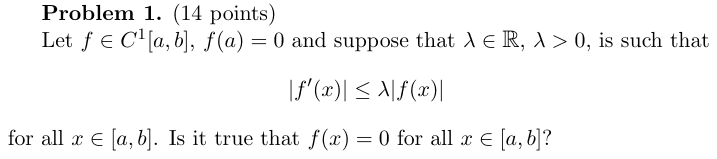
This transcription was compared symbol by symbol with the original, but not yet by a person.
Work for at least 45 minutes before opening the solution.
Official solution
Solution. Assume that there is such that . Without loss of generality we have . In view of the continuity of there exists such that and for . For we have . This implies that the function is not increasing in because of . Thus and for . Thus
Transcribed from the official solutions, page 6. This transcription has not been checked a second time; if in doubt, look at the original.
Archive problem: the statement is the official text (transcribed, with the original above). Subject classification and difficulty were estimated automatically; hints and a worked solution are added over time.
How did it go?
Moves you mark come back sooner in triage.